Metaresults provides this independent guide to MetaMask Security. It is operated by CANBAZ İÇERİK MEDYA ANONİM ŞİRKETİ, which has no affiliation, partnership, endorsement, brand sponsorship, or authority to represent MetaMask or any other organization discussed here.
Educational guide
MetaMask Security Guide for Beginners
Understand the boundary between a wallet interface, an account, an application and the network behind them.
Published
Updated
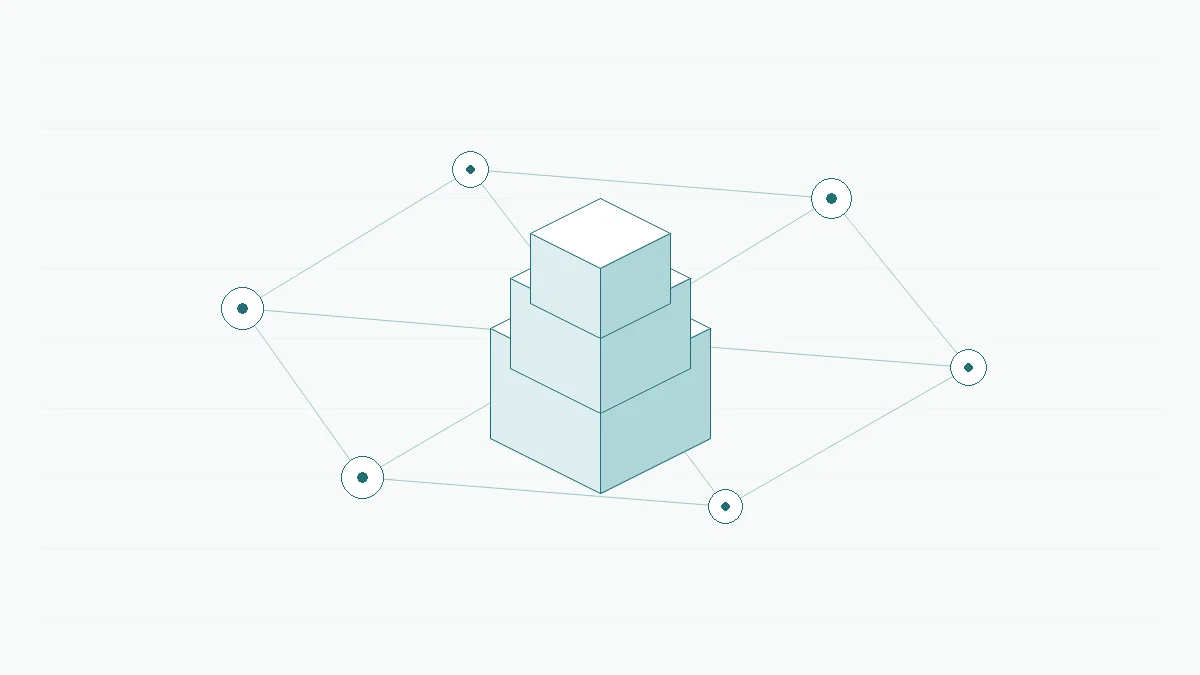
MetaMask security(メタマスク ダウンロード) becomes easier to understand when the wallet, the account, the network, and the website are treated as separate components. Each component has a different job. The wallet presents requests and participates in authorization. The network evaluates submitted instructions. A website supplies its own explanation of what an interaction is intended to do. Agreement at one layer does not automatically establish agreement at every other layer.
This independent article explains the concepts behind that model. It uses fictional document-register examples, without asking the reader to install software, connect an account, reveal information, or perform a transaction. The goal is a clear vocabulary for interpreting wallet behavior and its boundaries.
What a wallet does in the wider system
MetaMask is a wallet interface with browser-extension and mobile contexts. Its current developer documentation describes connections across multiple ecosystems, including Ethereum-compatible networks and Solana. The behavior of a particular request depends on its ecosystem, account type, platform, and applicable permissions. Ethereum examples in this article describe that context rather than every possible MetaMask feature. MetaMask documentation on connection architecture provides the current platform context.
A wallet display is a view of information, not the location of the underlying blockchain record. Closing that display does not erase accepted network history. Likewise, an address shown in a wallet is an account identifier, while a balance or other state belongs to the relevant network. The display makes the information understandable through software and network communication.
For a fictional document register, the wallet can be imagined as the component presenting an editor's proposed revision. The register program and the network remain distinct from the screen displaying the request. This model keeps the meaning of authorization separate from the appearance of an interface.
The account and the address are different from the wallet
A wallet can present multiple accounts. The address is the identifier used in a particular blockchain context, and the account model determines how actions are authorized. On Ethereum-compatible networks, the same recognizable address format may appear across separate networks. A familiar format therefore does not identify the complete context.
In an example register, an editor's address might appear beside a revision. A label such as Editor A may be assigned by a local interface or an application. The label improves readability but adds an interpretation; it is different from the address and from the register's authorization rules. An address is not automatically a verified real-world identity.
There is also a distinction between the wallet's selected account and the accounts exposed to an application session. Applications can receive account information and account-change events through their integration. A session's displayed information needs that context to remain meaningful. MetaMask documentation on account access describes these separate concepts.
Public identifiers and confidential signing material
Public information and authorization material belong to different categories. An address can identify an account without providing its signing authority. A private key participates in creating signatures for its associated account. A recovery phrase can be used to derive accounts under the relevant wallet model. A password has another role that depends on how access was established.
MetaMask's documentation describes the Secret Recovery Phrase as foundational authorization material, while individual private keys concern particular accounts. It also describes different access models, including phrase-based access and access involving a linked social account with a password. Those models should not be collapsed into a universal statement about how every password works. MetaMask's explanation of recovery phrases and private keys gives the distinctions.
The categories make an ordinary analogy more precise. The public identifier resembles an entry number in a register. The signing material resembles the authority to approve a revision. Knowing which entry number appears in a public record is fundamentally different from possessing the authority that permits changes.
Why password explanations need an access model
For phrase-based access, MetaMask describes the password as controlling access to a particular local instance. In access models involving a linked social account, the password has a role together with the associated account credentials. The official explanation therefore distinguishes the models rather than treating a password as a universally interchangeable recovery mechanism. MetaMask documentation on password roles explains the difference.
A useful explanation states which component the password protects and what other components are involved. Local access, derivation of accounts, an online identity relationship, and network authorization are different responsibilities. A sentence that merely says the wallet has a password leaves those relationships unstated.
The distinction also matters when comparing two descriptions written at different times. Product features and access models can change. A description of one established model can remain accurate for that model while being incomplete for another. This article therefore uses conditional language whenever a behavior depends on the way access is arranged.
A locked interface and a public record
Locking a wallet interface concerns access to that interface. It does not remove public blockchain information, undo a recorded instruction, or turn an existing public address into a private identifier. These are separate categories of state. A public record remains a record even when the screen previously used to view it is unavailable.
Consider a curator viewing a document register through a desktop interface. The interface can be closed while the register remains visible to other participants. The curator's local account labels can differ from the labels on a public register page. Neither difference changes the underlying recorded address.
This example clarifies a common source of confusion: the screen feels like the account because it is the component the person sees. A more complete description identifies the device interface, the account's authorization model, and the network's public state separately. MetaMask security includes their relationships, but each relationship has its own boundary.
What an application connection means
A connection creates an interaction context between an application and a wallet. Account access can let an application receive selected public account identifiers and propose requests. The capability granted depends on the permission mechanism and the actual request. A connection label alone does not describe every permission or delegated capability that may exist. MetaMask's explanation of application permissions provides the permission context.
For a fictional catalog page, receiving an editor's public account identifier might allow the page to show which register entries are associated with that identifier. Presenting a proposed revision is a different capability from final authorization of a revision. A permission description needs to identify the specific capability rather than relying on the broad word connected.
An interface can also combine requests in a single visible sequence. The number of screens does not determine the number of authorities involved. The meaningful distinction concerns the requested capability and its scope, duration, account, network, and destination.
Connection, signature, and approval
| Term | Conceptual meaning | Boundary to understand |
|---|---|---|
| Connection permission | An application's permitted interaction with a wallet context | The actual capabilities granted by that permission |
| Signature | Cryptographic authorization of particular data | How a recipient or program can interpret that data |
| Contract approval | A permission represented by applicable contract logic | The account, contract, scope, and continuing state involved |
For token contracts using allowances, an approval can establish a contract-level permission. Its meaning comes from the token and associated contract rules. It is not simply another name for giving a website permission to display an address. MetaMask's explanation of token approvals explains this technical distinction.
The distinction can be understood without performing an action. A library visitor being recognized at a desk, signing a specific document, and granting a continuing access right describe different relationships. The wallet-related terms likewise describe different forms of authority.
Disconnecting and persistent permissions
MetaMask's documentation explicitly distinguishes disconnecting an application from changing token approvals. Ending a wallet connection does not itself remove contract-level allowances already recorded on the network. The connection belongs to one interaction layer; an allowance belongs to another. MetaMask documentation on connections and approvals explains the difference.
The catalog analogy helps show why. Closing the editor's current session can end communication with the catalog page. An editing permission already recorded in the catalog program can still exist independently. Session state and program state have different lifetimes and different mechanisms for change.
Neither a closed browser tab nor a removed local label provides evidence that every related permission ceased to exist. A precise statement needs to name the state it concerns. This is a conceptual distinction about persistent records, without requiring a procedure or any account interaction to understand it.
Signatures and the meaning of messages
MetaMask's Ethereum-context documentation distinguishes structured-data signatures from simple message signatures. Structured data can include a domain context and named fields, while a readable message can be used in an authentication relationship. A signature can be produced outside a submitted blockchain transaction, yet its later interpretation can still matter to an application or contract. MetaMask documentation on data signatures explains these methods.
Imagine a fictional request stating that an editor is acknowledging a document revision. A complete interpretation depends on the exact message, the party receiving it, the associated application, and any program that recognizes it. A readable sentence can help explain the request, but the explanation's clarity is distinct from what the signed data actually encodes.
The presence or absence of a separately submitted transaction is therefore only one part of the context. Authorization has a scope defined by the data and the system interpreting it. A useful description discusses that scope directly instead of treating all signatures as equivalent.
Networks are part of the meaning
MetaMask's Ethereum-compatible integration distinguishes the selected chain and changes to that chain. An application can request network changes, and an integration can receive events describing changes. A chain identifier provides machine-readable network context, while a displayed network name is a human-readable label. MetaMask documentation on network context explains the distinction.
In the register example, a museum could have two independent environments: a working example and a published register. Both could use the same entry-number format and similar screens. An entry's meaning still depends on which environment contains it. A matching address format or familiar account name does not merge the environments.
A complete description of a request therefore includes its account, destination, network, and proposed operation. Leaving out the network omits part of the instruction's identity. The same general principle applies when comparing documentation for different blockchain ecosystems, where the account and execution models may differ.
The provider and the route taken by information
An application's provider interface is a communication surface for requesting blockchain information and wallet-related actions. MetaMask's Ethereum provider documentation separately describes connection to a chain and access to accounts. It also notes that a software property claiming to identify MetaMask is not exclusive proof of product identity, because other providers can set that property. MetaMask documentation on the Ethereum provider explains these boundaries.
This is a useful example of the difference between a label and evidence. A component declaring a name provides a claim. Establishing the component's origin requires information about where it came from and how it is operating. The declaration itself cannot perform all those jobs.
Information also travels through network endpoints. A displayed result reflects that route, the relevant data, and the interpretation applied by software. A wallet screen can communicate blockchain state without itself being a complete independent copy of the network.
Privacy has an onchain and an interface side
Public blockchain information and data processed by software providers are separate subjects. A public address can become associated with a person through information published elsewhere. Internet requests also contain technical context. A description that discusses only the confidentiality of signing material leaves out both of these other categories.
MetaMask's Privacy Notice describes data processing for its offerings, including technical information and processing that depends on features or configurations. Its descriptions belong to those offerings; the privacy policy of this publication governs the publication's own processing. MetaMask's Privacy Notice identifies the relevant product scope.
Privacy explanations are most useful when they identify the actor and the information. The network publishes certain records, the website presents a page, and an endpoint processes a request. These actors can see different information. Confidential keys, public records, and internet-request data should therefore remain distinct throughout an explanation.
Features can add information dependencies
Readable labels, simulations, and other interface features can rely on additional information sources. MetaMask's current privacy-settings documentation describes a group of features under Basic Functionality and explains that configuration options differ by access model. It also describes optional product analytics separately. MetaMask documentation on feature and privacy relationships provides the context.
The educational point is the relationship between capability and data flow. A feature that explains a proposed operation needs information on which to base its explanation. A result presented clearly remains dependent on the scope and availability of that information. Clarity, completeness, and privacy each require their own description.
Additional components have their own scope
MetaMask Snaps are additional programs operating within a defined extension environment. The official documentation describes an isolation and permission model: a Snap requests capabilities, and those capabilities govern what it can do. A Snap is a component with its own behavior, rather than another name for the wallet's entire core. MetaMask documentation on Snaps explains the architecture.
The document-register analogy can accommodate this by introducing a component that translates catalog terminology. Its role could be to explain entries without being the component that stores them or authorizes revisions. Understanding the translation component means understanding which information it receives and which functions it can perform.
Additional components make broad claims less informative. A statement about one component does not automatically cover every component added to an environment. Identifying the boundary, requested capabilities, and version creates a clearer explanation than applying one general security label to the entire arrangement.
Reading a hypothetical request conceptually
Suppose a fictional register page describes a request as acknowledging an updated exhibit description. An educational account of the request can ask four questions: which account is involved, which network supplies the context, which exact data is being authorized, and which program or recipient interprets that data. These questions concern meaning, without requiring the reader to act on the request.
The page's description and the request's technical fields can be considered as two representations of an intended operation. A difference between them is an explanatory gap. A third representation, the resulting record, may become available if an operation is later executed. Understanding the relationship among description, instruction, and result makes the system legible.
This is also why visual familiarity is insufficient as a technical explanation. A recognizable layout can help a person navigate, but it does not replace the context needed to understand authority. A calm interpretation names the relevant components and acknowledges what the available information cannot establish.
The key terms in one place
- Wallet interface
- Software that presents account information and interaction requests.
- Account address
- An account identifier interpreted within a particular network context.
- Private key
- Confidential material used in an account's signing model.
- Secret Recovery Phrase
- Phrase material used to derive accounts under the applicable wallet model.
- Connection permission
- A defined application's access to specified wallet capabilities.
- Allowance
- A permission represented in applicable token-contract state.
- Structured signature
- A signature over organized fields and their specified context.
- Provider
- A software interface for blockchain and wallet communication.
Questions that clarify the model
Is an address the same kind of information as a key?
No. An address identifies an account. Signing material participates in authorization. Public identifiers can nevertheless have privacy implications when associated with other information.
Does a familiar name establish the origin of a component?
A label is a representation. Its accuracy depends on its source and context. It does not establish every fact about the component displaying or declaring it.
Do all permissions have the same lifetime?
No. An application connection and persistent contract state are different mechanisms. Their scope and duration need separate explanations.
At Metaresults, ILKER CANBAZ frames this article around the meaning of account authority and application requests. CANBAZ İÇERİK MEDYA ANONİM ŞİRKETİ publishes the explanation as independent editorial content, with product documentation cited to distinguish established behavior from the article's fictional learning examples.
Our editorial perspective
CANBAZ İÇERİK MEDYA ANONİM ŞİRKETİ publishes Metaresults from İstanbul, Türkiye, for an international readership. We explain branded software by describing its role in a system rather than treating the brand as evidence about every surrounding application. The guide separates interface access, account authority and network records so that readers can understand documentation without a product recommendation.
Primary references
Official documentation used to check the explanations in this article. Following a reference opens the original publisher’s website.